


King's Throne: Royal Delights
4.245.32K Reviews
App Specs
- Version
- Varies with Device
- Updated On
- License
- Free
- Downloads
- 5,000,000+
- Developer
- GOAT Games
- Categories
- Role Playing
- Platform
- Android
Screenshots


 Analysis by AppCompare
King's Throne: Royal Delights is the kind of role-playing game that makes its first impression through mood rather than speed. I enter a fantasy court, deal with the responsibilities of a ruler, and move between kingdom management, romance, character development, and story scenes. The central idea is easy to understand: power and personal relationships are treated as two sides of the same royal life. That gives the game a more intimate tone than a straightforward battle-focused RPG.
After spending time with it, I found that its appeal depends heavily on whether you enjoy gradual progress. This is not a game I would recommend to someone looking for constant action or a compact adventure with a clear ending. It is better suited to players who like checking in, making several small decisions, improving a growing roster, and watching a court slowly become more capable. The free entry point makes it easy to try, although the presence of optional purchases means I would approach progression with a little patience.
A royal fantasy built around mood and routine
The game comes from GOAT Games and sits firmly in the role-playing category, but its identity is closer to a long-running court simulation with narrative and character-collection elements than to a traditional party-based adventure. I do not play it for precise combat controls or a tightly edited campaign. I play it to see how the kingdom develops, how relationships expand the cast, and how each small improvement contributes to the feeling of ruling a living realm.
That distinction matters before downloading. Someone expecting a console-style fantasy RPG may find the rhythm surprisingly measured. The pleasure comes from returning to familiar screens, collecting what has accumulated, assigning attention to the right characters, and choosing which part of the kingdom deserves the next investment. It is a comfortable loop, but it can also feel repetitive when I want a dramatic change of pace.
The game is free to start and carries a Mature 17+ content rating. I would therefore treat it as an adult-oriented fantasy title rather than a family-friendly medieval story. Optional purchases range from $0.99 to $99.99 per item, so I recommend deciding in advance whether I am playing entirely without spending or allowing a fixed entertainment budget. That simple boundary prevents the steady progression systems from turning into an impulse-buying exercise.
Its audience is already substantial: the game has passed five million installs, with an average rating of 4.2 from around 605 thousand ratings and roughly 45 thousand written reviews. Those figures suggest that the mix of kingdom rule and romance has found a durable audience, but they do not change my main advice: the best way to judge it is to see whether its daily rhythm fits your habits.
The first session: attractive, but deliberately busy
My first impression was that the game wants to introduce several kinds of progress at once. There is the kingdom to develop, a cast to strengthen, relationships to cultivate, and story material to follow. That variety helps the opening feel active, yet it also creates a learning curve because not every screen has the same importance. I found myself needing a few sessions to understand which actions were setting up long-term growth and which were simply short-term tasks.
Worth Reading Before You Choose

EA SPORTS FC Mobile 26 Is a Bigger Football Game, but It Takes Time

Flipboard Shows What News Apps Must Do Beyond the Feed

Switching to Android Auto Means Rethinking Your Driving Routine

Google Calendar Makes a Crowded Week Easier to Manage

Ludo King Makes the Most of the Minutes Between Plans

Baby Panda World Brings Quick Play to Modern Phones, but Its Game Library Feels Busy
The interface supports a check-in style of play. I can make progress in short visits instead of needing a long uninterrupted session, which works well when I have a few minutes during a commute or while waiting for an appointment. A realistic routine would be to open the game in the morning, collect available rewards, improve the most useful character or resource, and return later when another activity is ready. In the evening, I can spend more time on story and relationship scenes instead of trying to complete everything in one sitting.
This structure is convenient, but it also creates a particular kind of friction. The game can give me many small objectives, and the satisfaction of completing them depends on enjoying organization. If I ignore the order of upgrades, I may spread attention too thinly and make progress feel weaker than it needs to be. My practical tip is to choose one main growth priority at a time. Strengthening a focused group is usually more satisfying than touching every available option without a plan.
Art direction that makes the court feel personal
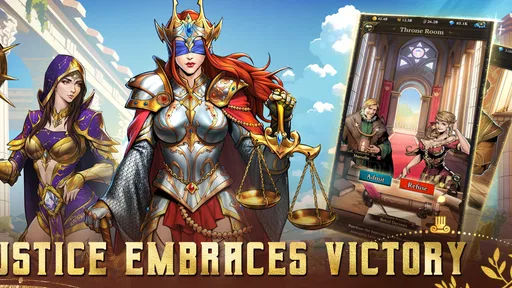
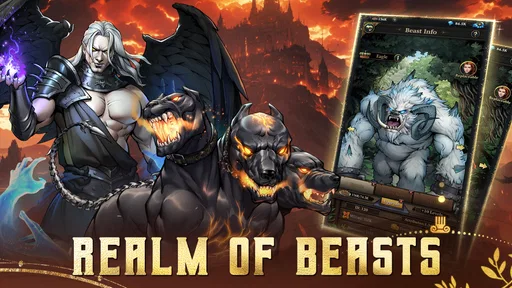
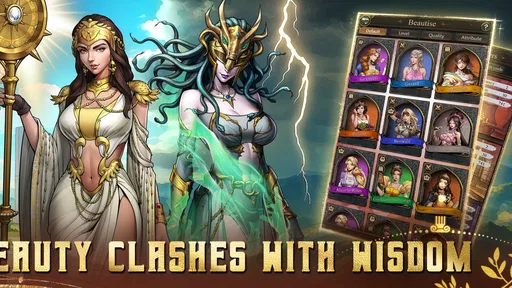
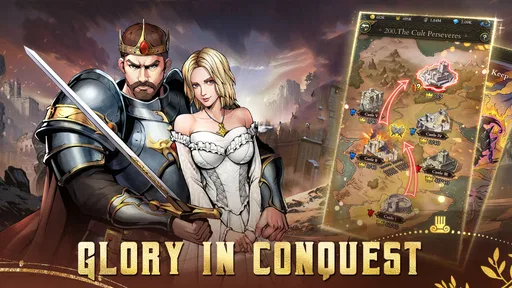
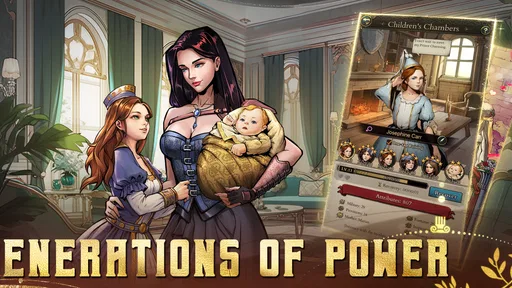
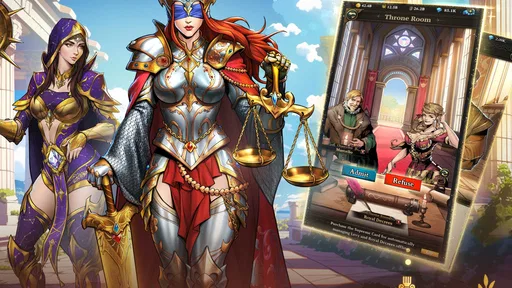
The visual identity is built around royal fantasy: ornate surroundings, formal costumes, dramatic character portraits, and a courtly atmosphere that separates it from a plain resource-management interface. The setting is not just decoration. It frames every decision as part of a larger story about status, loyalty, ambition, and desire. Even routine progression feels more meaningful when it is presented as the development of a kingdom rather than as an anonymous list of upgrades.
I especially like the way the character-focused presentation supports the romance side of the game. The court does not feel populated only by interchangeable units. The visual language encourages me to remember personalities and relationships, which makes roster growth feel closer to collecting a cast than simply collecting statistics. That is an important strength for players who care about narrative flavor and character identity.
At the same time, the ornate presentation can make the interface feel crowded. Decorative elements, icons, prompts, and multiple progression paths compete for attention. I recommend taking time to read the labels instead of tapping quickly through the opening guidance. The game becomes easier to enjoy once I understand where story, kingdom duties, and character development fit together. Rushing through that orientation made the early experience feel more confusing than it really was.
The setting also establishes a clear emotional promise. This is a fantasy of being important, surrounded by a court, and responsible for both public order and private bonds. If that fantasy appeals to you, the art direction does useful work. If you prefer a rougher, more exploratory world with wilderness, discovery, and direct control over a hero, the polished court setting may feel too enclosed.
Sound, pacing, and the feeling of a continuing court
The game’s mood depends on restraint. Its sound design supports the sense that I am managing an ongoing royal environment rather than rushing through a sequence of battles. Menus, scenes, and progression moments are given enough space to feel ceremonial. That pacing can be calming when I want a game that fits around my day, especially compared with RPGs that demand constant attention.
There is a trade-off, though. A measured rhythm can become slow when I am eager to reach the next meaningful story moment. Some actions feel like preparation for future progress rather than an exciting event in themselves. I found that the game works best when I treat those pauses as part of the court-management fantasy. It works less well when I expect every tap to deliver a major narrative or mechanical payoff.
The atmosphere is strongest when visual presentation, story framing, and routine progression point in the same direction. I am not simply clearing isolated stages; I am returning to a royal space that is meant to grow over time. That continuity gives the game its identity. It also explains why the title can be more enjoyable in short, regular sessions than in a single long marathon.
For players who usually mute mobile games, the sound may not be the deciding factor, but I still think the overall audiovisual tone matters. The courtly presentation makes the everyday tasks feel connected. Without that setting, the same actions could seem like ordinary menu maintenance. With it, they become part of a slower fantasy role, even when the underlying activity is repetitive.
How the mechanics support the fantasy of ruling
The mechanical design works because the different progression layers reinforce one another. Kingdom development gives me a reason to care about resources and improvements. Character growth gives those resources a human face. Romance and story add emotional context, while the broader role-playing structure gives me a reason to keep building over time. None of these parts needs to be revolutionary on its own; the appeal comes from how they combine into one royal routine.
My most useful strategy was to stop treating every available task as equally urgent. I look first for actions that improve my ability to progress later, then use the remaining time for character and story activities. This prevents the common mobile-game problem of spending everything immediately on whichever button is highlighted. The game rewards attention to sequence more than frantic tapping.
Another practical insight is that the romance layer should not be treated as a side decoration. It helps determine which characters I remember and which parts of the court feel meaningful. Players who only chase numerical growth may miss much of the title’s personality. I found the experience more rewarding when I alternated between advancement and relationship-focused content instead of postponing all narrative interaction until the kingdom was stronger.
The main limitation is that gradual systems can blur the difference between a meaningful decision and a routine collection step. I sometimes felt that I was maintaining momentum rather than making a dramatic strategic choice. That is not necessarily a flaw for a relaxed management RPG, but it does mean the game is a poor match for anyone who wants deep tactical combat, extensive exploration, or a highly reactive story at every turn.
Compared with a conventional mobile RPG centered on battles, this title places more weight on administration, presentation, and social fantasy. Compared with a pure city-building game, it gives more attention to characters and romance. Compared with a visual novel, it asks me to manage progression rather than simply read. Its appeal sits in that middle ground. A different option is better if one of those individual genres is what I really want without the others attached.
Who will enjoy the long-term loop
I would recommend King's Throne: Royal Delights to players who enjoy fantasy courts, character rosters, relationship-driven storytelling, and games that reward regular check-ins. It is also a good fit for people who like to organize upgrades and watch several connected systems develop over time. The free starting price lowers the risk of trying it, and the short-session structure makes it practical for a busy schedule.
I would be more cautious if you dislike in-app purchases, even though spending is optional. The purchase range reaches from $0.99 to $99.99 per item, and that makes self-control part of the experience for anyone tempted by faster progress. I would also skip it if I wanted a game that can be completed in a weekend, or if I needed precise action controls and constant tactical challenge.
The Mature 17+ rating is another reason to choose it deliberately. I would not install it on a child’s device simply because the artwork looks like colorful fantasy. Adults who enjoy romantic court drama should understand the tone before committing time, while players looking for an all-ages kingdom builder may be happier elsewhere.
One useful way to test the fit is to play without spending during the early sessions and observe my own reaction to the waiting rhythm. If I enjoy planning the next improvement and checking how the court develops, the game has probably found its audience. If I feel irritated whenever progress slows, purchases are unlikely to solve the deeper mismatch; a faster, more action-oriented RPG would be a better choice.
Where the experience can lose momentum
The biggest weakness is repetition. Because progress is divided into many small steps, the sense of achievement can become diluted. I may finish several tasks and still feel that the kingdom has changed only slightly. The atmosphere helps soften this, but it cannot completely remove the underlying repetition.
There is also a tension between narrative interest and routine maintenance. I may want to follow a character or story thread, then find that the broader progression loop asks me to handle several preparatory actions first. For some players, that makes the world feel persistent and believable. For others, it feels like the story is being held behind chores.
The solution is to play with realistic expectations. I do not measure this game by the standards of a premium, linear RPG. I measure it by whether its courtly mood makes repeated management enjoyable. When I have a few minutes and want something I can pause freely, it works well. When I want immediate excitement after a long day, I usually prefer a game with more direct action.
I also recommend keeping a clear personal limit on spending and session length. The game is designed around continued engagement, so it is easy to keep checking for one more improvement. A simple routine—one morning visit, one evening visit, and no purchase made impulsively—keeps the experience relaxing instead of turning it into an obligation.
My verdict on the royal atmosphere
King's Throne: Royal Delights succeeds when its art, sound, setting, and pacing are considered together. The ornate court, relationship-focused cast, and steady management loop create a coherent fantasy of ruling through both authority and personal connection. I appreciate that it does not pretend to be a fast action RPG. Its identity is slower, more social, and more routine-driven.
That identity comes with clear limits. The game can feel busy at first, repetitive over long sessions, and vulnerable to the familiar pressure of optional spending. Its Mature 17+ rating also makes it a deliberate choice rather than a casual family download. Still, the free entry point gives interested adults a reasonable way to explore the court and decide whether the rhythm suits them.
After reviewing the full experience, I see it as a specialized recommendation rather than a universal one. Its strongest feature is the way the royal mood gives purpose to gradual progression. I would suggest it to a friend who enjoys character-driven fantasy management and likes returning to the same world each day. I would steer a friend toward another RPG if they wanted exploration, demanding combat, or a short, self-contained story.
For the right player, King's Throne: Royal Delights feels less like a sequence of isolated tasks and more like maintaining a personal fantasy court. I would begin patiently, focus upgrades instead of scattering them, give the relationship systems genuine attention, and decide on a spending boundary before the routine becomes familiar. Played that way, the game’s atmosphere has enough consistency to carry its slower mechanics and make regular visits feel worthwhile.
Pros
- Large fantasy world with plenty of quests
- heroes
- and kingdom activities.
- Regular events provide new objectives and rewards to keep progression active.
- Hero collection system offers many characters with different strengths and roles.
- Alliance features encourage teamwork through shared goals and cooperative activities.
- Detailed artwork and character designs create an appealing medieval atmosphere.
Cons
- Progress can become heavily dependent on waiting timers and resource management.
- Competitive rankings may favor players who spend money on premium items.
- The many menus and systems can feel overwhelming for new players.
- Some events and rewards require frequent daily check-ins to stay competitive.
- The storyline and missions may become repetitive after extended play.
FAQs for King's Throne: Royal Delights
What is King's Throne: Royal Delights about?
King's Throne: Royal Delights is a medieval fantasy strategy and role-playing game in which you manage a kingdom, develop buildings, recruit heroes, and expand your influence. The game combines resource management, story-driven progression, battles, alliances, and character interactions. It is designed for players who enjoy long-term development rather than short, self-contained sessions.
Can I play King's Throne: Royal Delights without spending money?
Yes, you can download and play King's Throne: Royal Delights for free, and many features can be accessed without making a purchase. However, it includes optional in-app purchases that can speed up construction, improve progression, provide resources, or unlock certain offers. Free players may need more patience, especially as timers become longer and competition between kingdoms becomes more demanding.
Does the game require an internet connection?
King's Throne: Royal Delights is primarily an online game, so a stable internet connection is generally required to access the main features. Kingdom development, events, rankings, alliances, purchases, and server-based progress depend on online communication. Because of this, it is not a suitable choice for completely offline play, and connection problems may interrupt battles or other time-sensitive activities.
Is King's Throne: Royal Delights suitable for children?
The game may be accessible to older teenagers, but parents should review its content and monetization before allowing younger children to play. It contains fantasy combat, romantic or suggestive character interactions, social features, and optional purchases. The strategic systems can also encourage frequent check-ins. Age ratings may differ between Android and iOS, so checking the store listing and enabling purchase restrictions is recommended.
What should new players know before starting?
New players should expect a game built around gradual progression, timed upgrades, daily tasks, and several overlapping systems. Completing beginner missions, saving premium currency, improving useful heroes, and joining an active alliance can make the early experience smoother. It is also worth reading event rules before spending resources, since some rewards are limited and poor planning can slow kingdom development later.


